The Bespoke Journey
Commissioning a bespoke suit is not a transaction. It is a journey, one that unfolds over several months, across three to four visits to the atelier, and through a process that has remained largely unchanged for centuries. From the first conversation to the final handover, every stage carries its own significance. This is what that journey looks like.
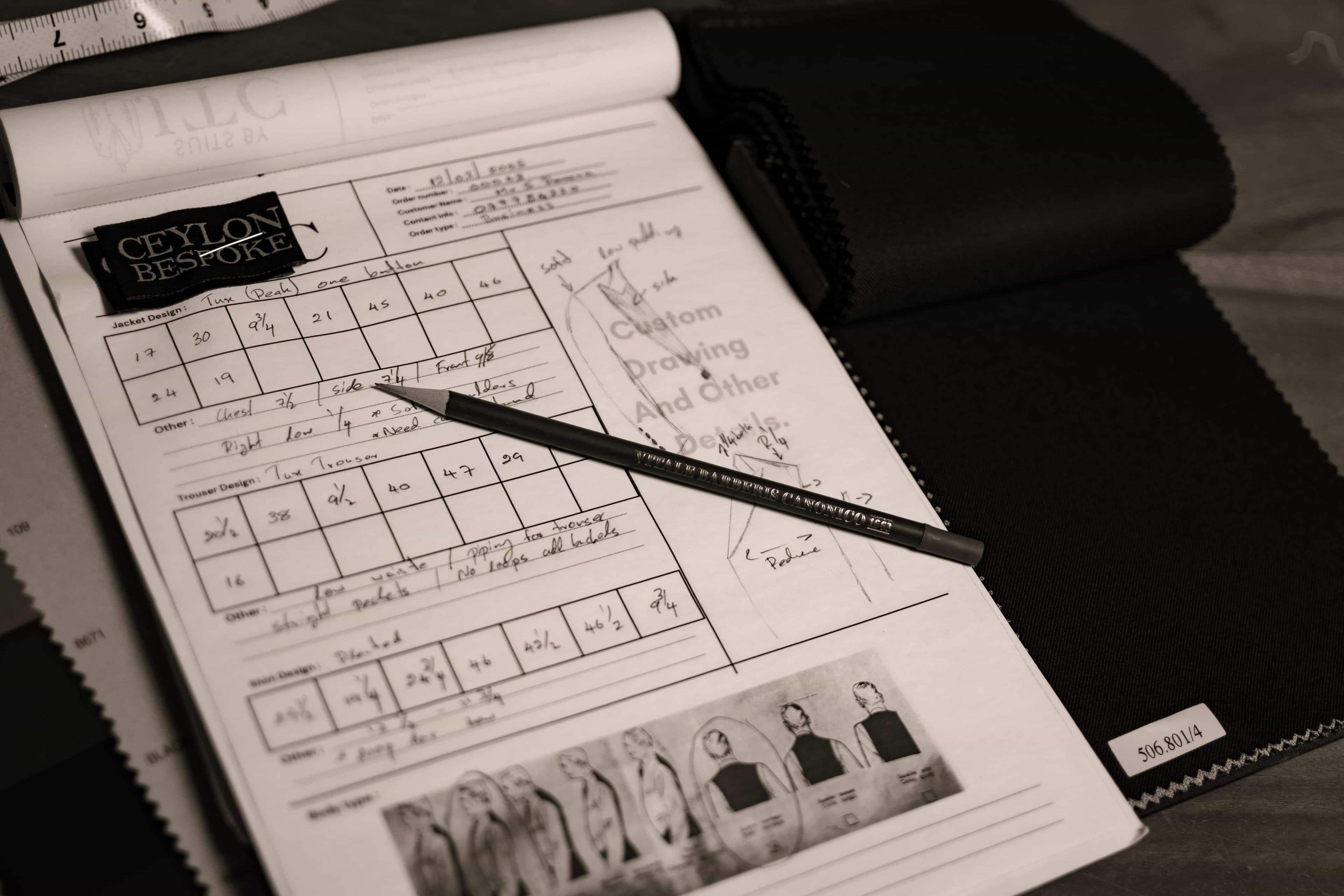
The Initial Consultation
Every commission begins with a conversation. The client arrives with an idea, perhaps fully formed, perhaps nothing more than a feeling, and the tailor's role at this stage is to listen, to understand and to translate that vision into something tangible.
Styles are explored, lapels are discussed, fabrics are brought out and considered in the light. Measurements are recorded with care, taking into account not just the dimensions of the body but the way it carries itself. By the end of this first meeting, a picture has begun to form. The tailor outlines the timeline ahead, and the commission is set in motion.
The Fitting
The Baste Fitting

Weeks pass. The pattern is drafted. The canvas is constructed. The cloth is cut. And then comes the moment the client first encounters the garment in physical form.
The baste fitting is unlike any other stage in the process. The jacket arrives held together with loose basting stitches, deliberately unfinished, raw in appearance but already carrying the architecture of what it will become. This is not the moment to judge the final look. The client is not meant to see a finished suit. What they are seeing is possibility.
For the tailor, this is the most critical stage of the entire commission. It is here that the balance of the jacket is assessed, the way the cloth falls across the shoulders is studied, and the relationship between the garment and the body it is being built for is truly established. Fundamental changes can still be made here, and often they are. That openness to adjustment is precisely what separates bespoke from everything else.
The Second Fitting
By the time the second fitting arrives, the suit has transformed. The jacket facing is now attached, the sleeves and collar are basted into position, and for the first time the client can begin to see what they have been waiting for. The shape is there. The character is emerging.
This is still a working stage. There remains the ability to take in or let out from the body, and the client is encouraged to raise anything that does not yet sit quite right. A bespoke suit is built on dialogue, and this fitting is as much a conversation as it is a technical assessment. Nothing is too small to mention. Every detail noted here finds its way into the finished garment.
The Final Fitting

The jacket arrives at the final fitting in a near complete state. In some commissions, where the baste fitting has gone particularly well, the second and final fittings are brought together into one. The buttonholes, the felling of the lining and the button attachments are yet to be completed at this stage, but the suit is recognisably itself. The tailor will still make refinements where necessary. In a true bespoke commission, nothing is signed off until it is right.

The Handover
Months have passed since that first conversation in the atelier. Fabrics were held up to the light, measurements were taken, ideas were exchanged. The garment was assembled, taken apart and assembled again. Each fitting brought it closer. Each adjustment brought it to life.
And now it is here.
The finished suit, pressed and prepared, waiting for the moment it meets its owner for the last time as a work in progress and for the first time as a finished work of art. Every hand stitched buttonhole, every padded canvas, every pick stitched edge, all of it conceived and constructed entirely for one person.
This is what the journey has been building towards. Not just the delivery of a garment, but the completion of something that carries within it months of work, the craft of the hands that made it and a quiet artistry that will only deepen with time. A suit built for a lifetime, and handed over as one.