Making It Accessible to the Masses: The Fused Suit
June 22, 2026
Making It Accessible to the Masses: The Fused Suit
Within the true bespoke tailoring community, the fused suit is widely regarded as an inferior, low quality product. As a bespoke tailor, I have long shared that assessment. Yet I practice in a region where fused suits form the very foundation of the tailoring industry, and where operating a tailoring business without embracing fused construction is practically impossible. Fused tailoring brought the suit within reach of the masses worldwide, and in doing so, it almost certainly contributed to the decline of true bespoke tailoring. Viewed from a wider angle, however, it has also sustained and advanced the industry in ways that are easily overlooked. This article examines fused construction in detail, from its origins and its arrival in Sri Lanka to how a fused suit is actually made, its inherent drawbacks, and my honest perspective as a practicing tailor on where the fused suit belongs and how it can be done better.
The History of the Fused Suit
Like many of tailoring's technological advances, fusing originated in Germany. It emerged in the 1960s, when the firm Kufner developed the first commercially viable fusible interlining. The company remains in operation today, producing canvas and fusible interlining used throughout the industry. By the 1970s, fusing had established itself firmly in industrial, mass scale garment manufacturing, offering factories a faster and cheaper alternative to hand sewn canvas.
Sri Lankan tailors adopted the technology considerably later, between the late 1980s and early 1990s, a delay that was likely typical across much of the developing world. The cost of the material, its limited availability in small quantities, and Sri Lanka's closed economy through the 1970s were the probable reasons fusible interlining took so long to reach the island.
As a former colony, Sri Lanka's tailoring trade originally operated at a fully bespoke level, grounded in traditional canvas construction inherited from British methods. Over time, local tailors drifted away from those techniques. Shortcuts were introduced to reduce production time, only the most essential elements of the craft survived, and the quality of canvas and other tailoring accessories declined in step. The transitional era is best remembered for a thick, starchy material known locally as “cassava canvas,” a thin cotton mesh reinforced with cassava starch.
The Construction of a Fused Suit
A fused jacket is assembled from a defined set of components, and in most cases these accessories fall short of the quality found in true bespoke garments. This is a deliberate choice rather than an oversight, since the entire purpose of fusing is to keep the garment affordable.
The main elements of a fused jacket include:
- Suit fabric
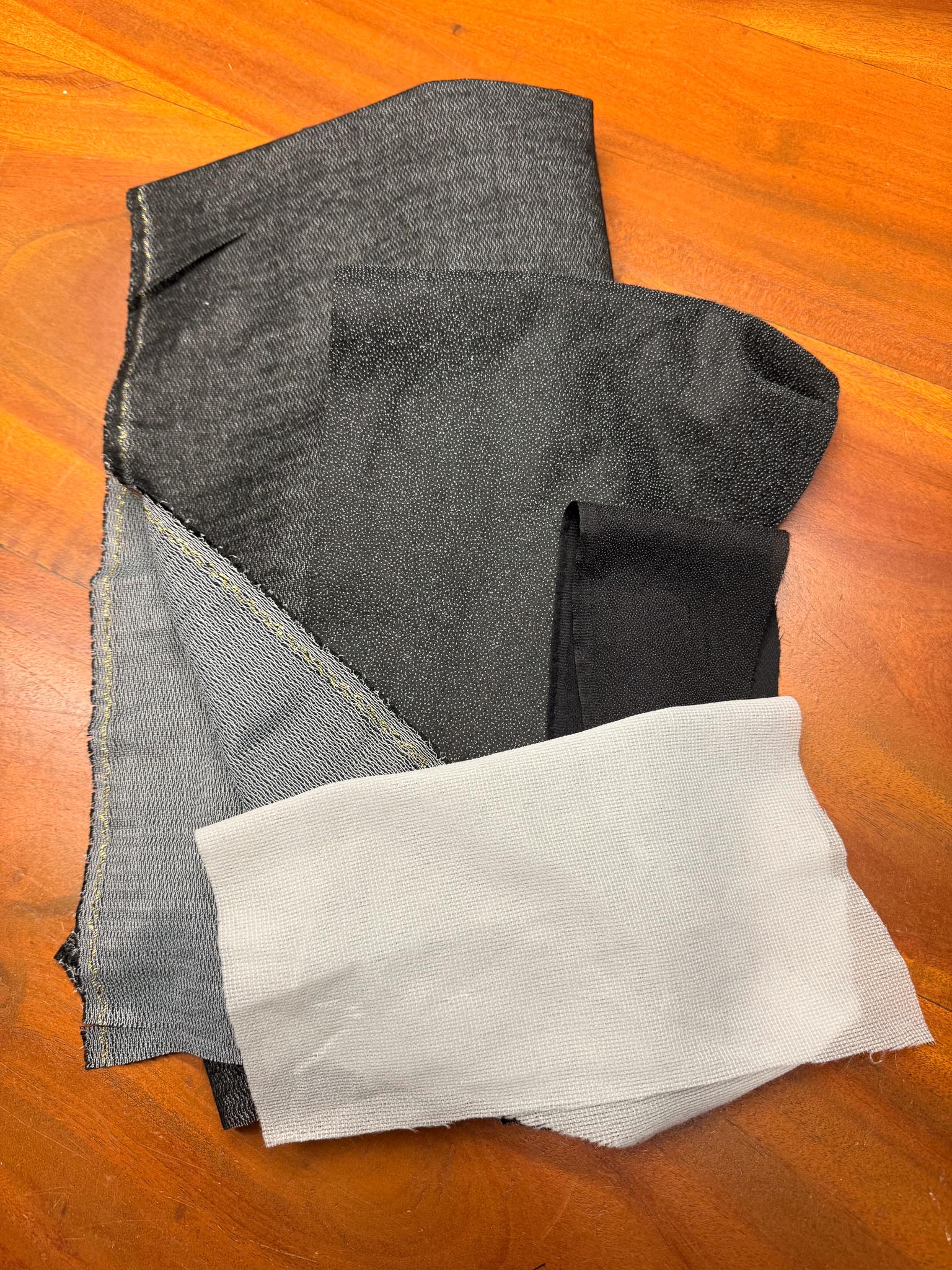
- Fusing fabric for the main front panels
- Fusing fabric for the hems and other areas requiring reinforcement
- Double sided fusing tape
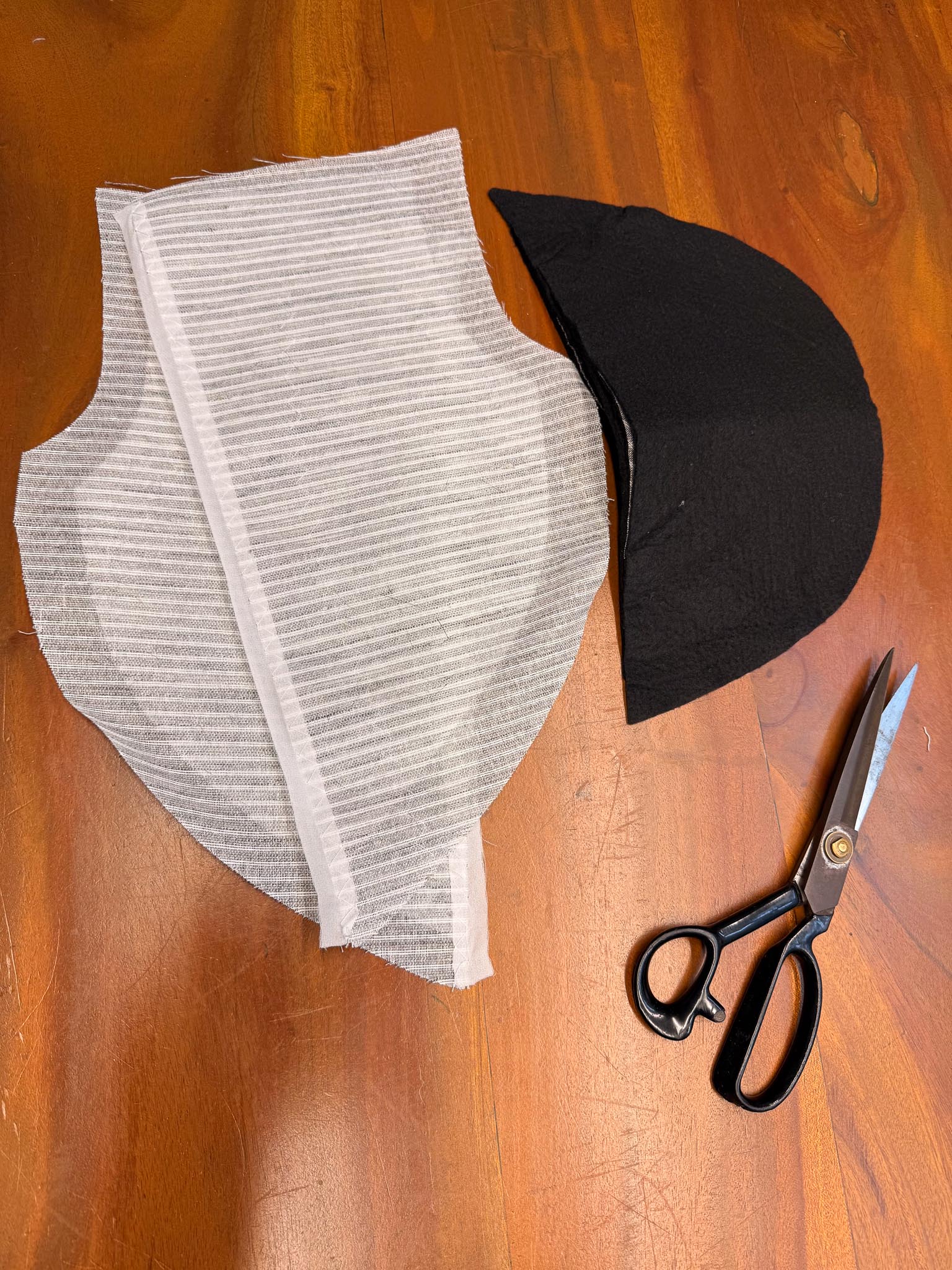
- Pre-made chest piece
- Under collar felt
- Canvas or fabric for the sleeve head
- Shoulder pads
- Body and sleeve lining
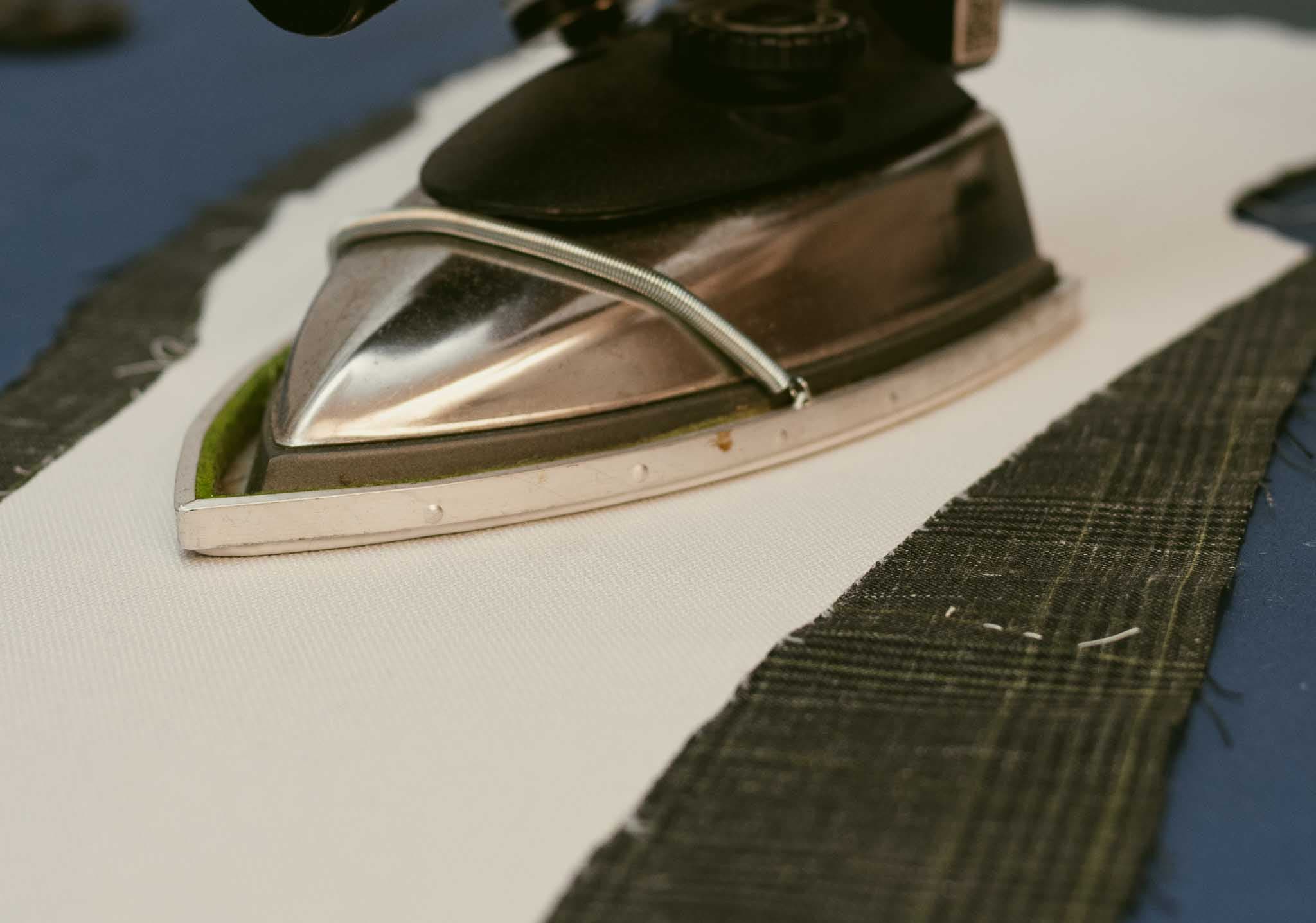
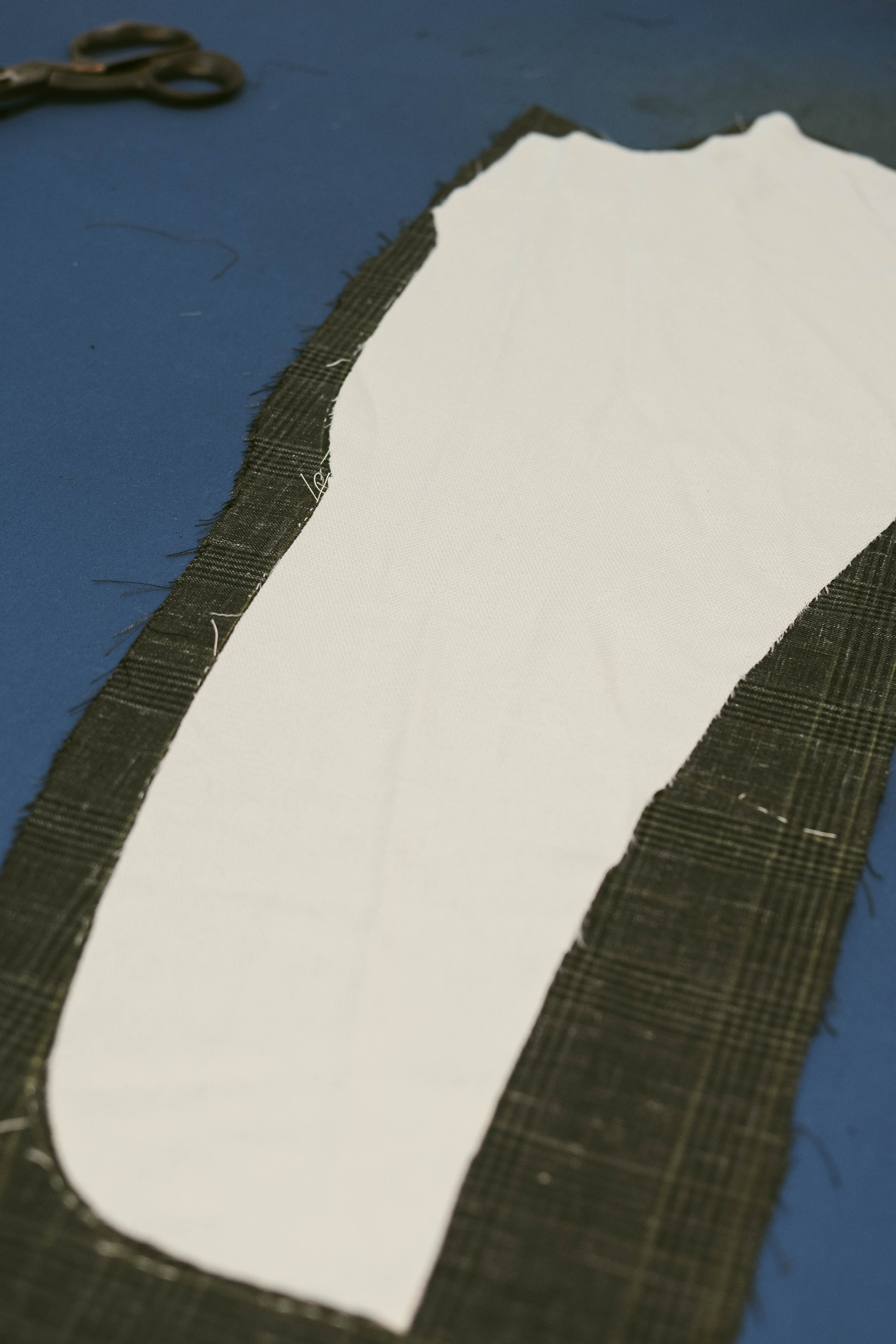
The construction process is relatively straightforward. The front panels and hems are fused first, ideally with a proper fusing press, which minimizes several of the drawbacks discussed below. The premade chest piece is then attached to the jacket fronts and the facing is sewn in. Once the body is complete, the collar is fused, reinforced with under collar felt, and attached. The sleeves are set last, together with the shoulder pads and roping, while double sided fusing tape stands in for hand tacking at various points inside the garment.
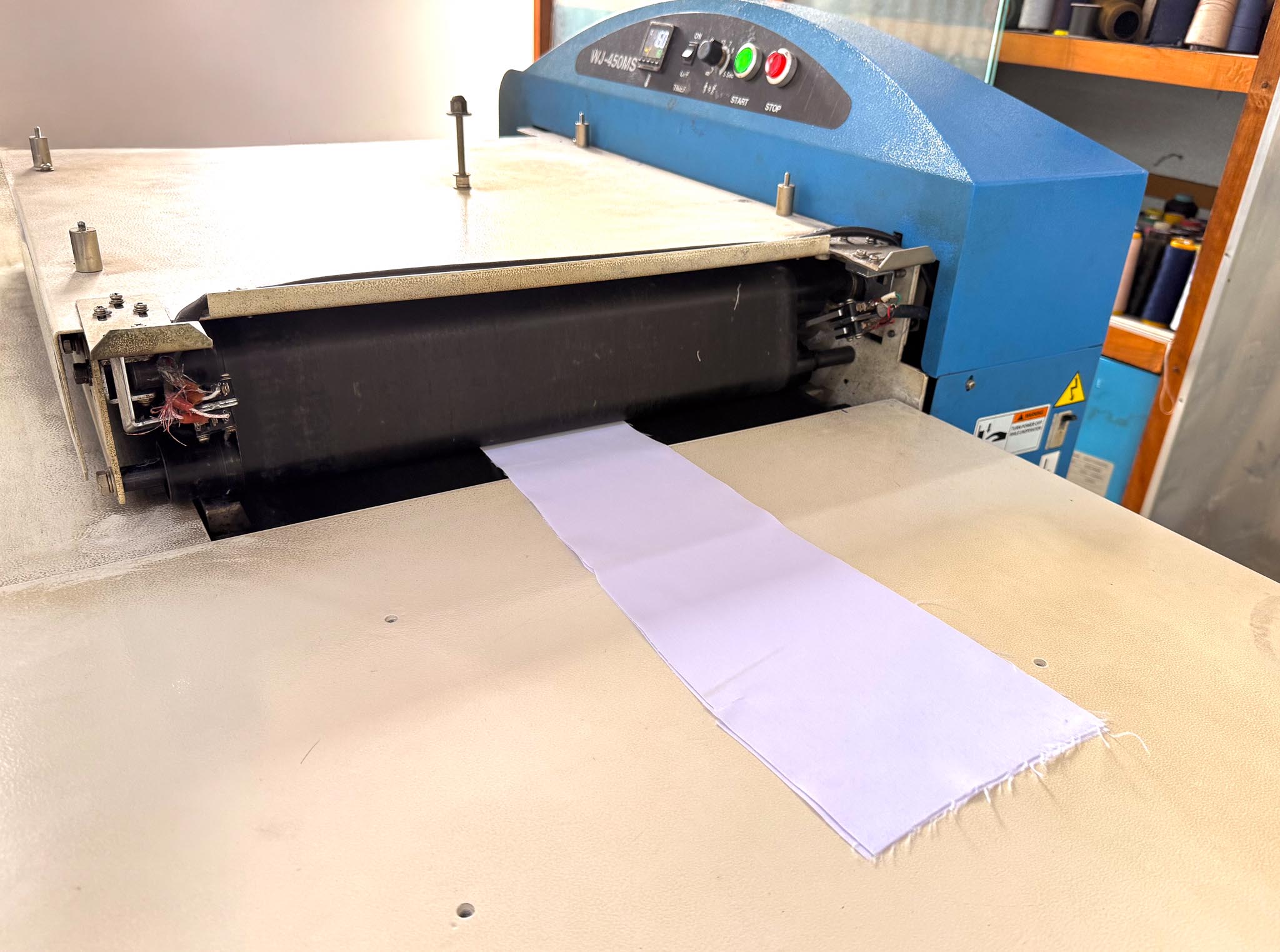
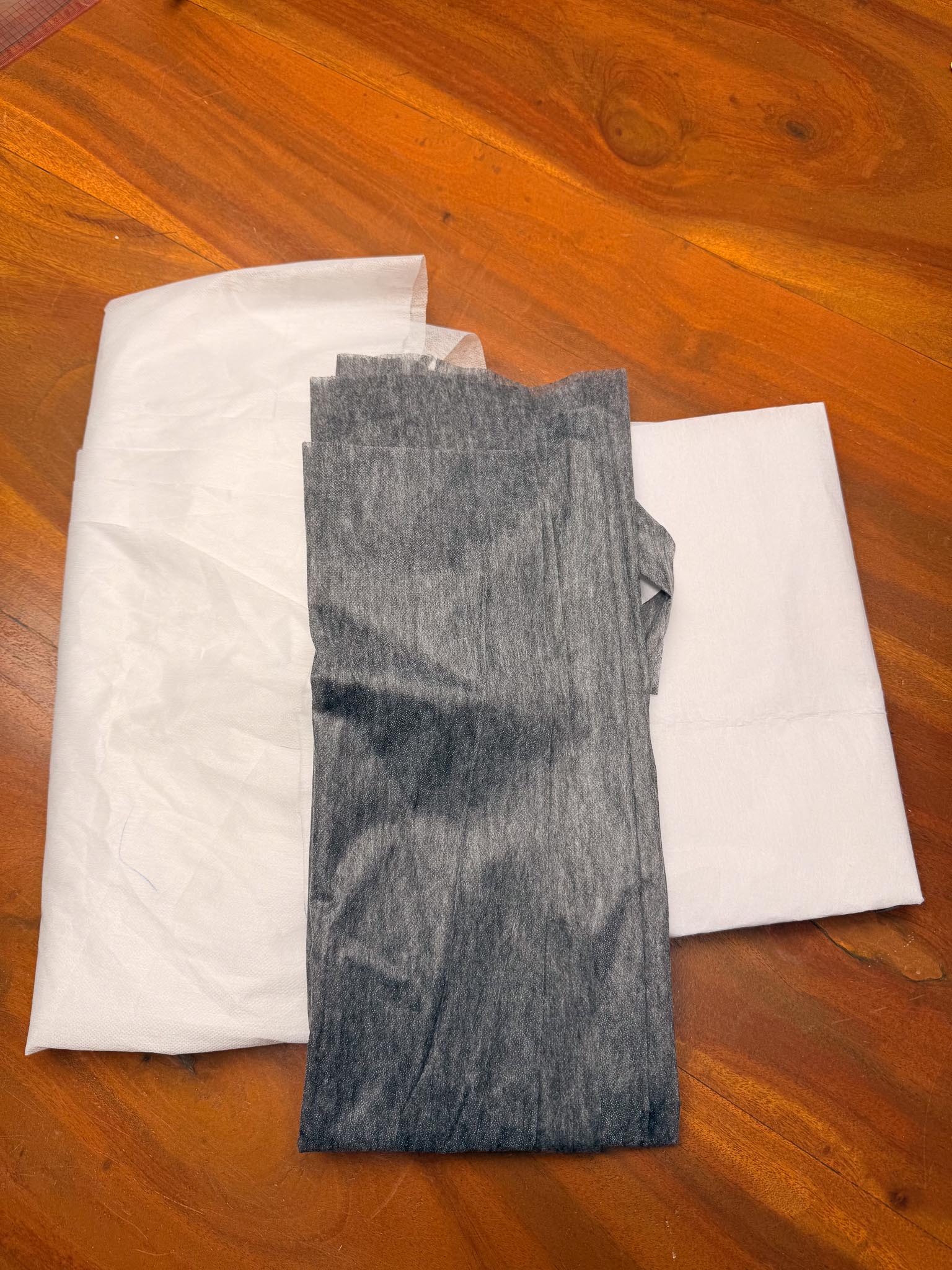
A single tailor working alone can complete a basic fused jacket within a day. A highly skilled hand can reduce that time further, while more detailed construction may extend it to two. The one day delivery promise so often attached to fused suits is therefore not the extraordinary feat customers are led to believe. Many tailors routinely produce two jackets a day, and in a semi industrialised workshop, several jackets a day is entirely achievable.
The Real Drawbacks of a Fused Garment
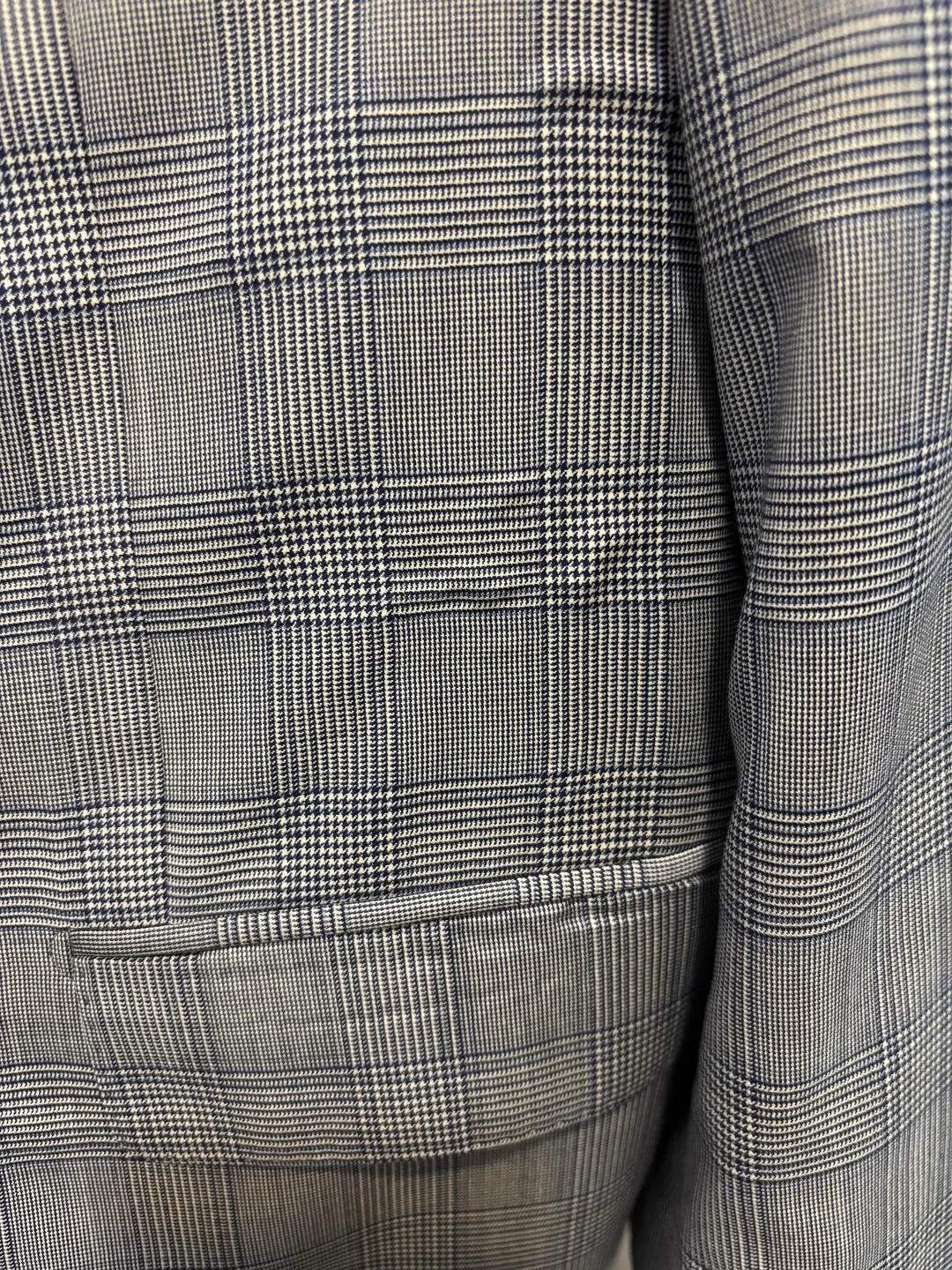
Bubbling
Bubbling is the most widely recognised failure of fused construction. It occurs when the adhesive bond between the fabric and the fusing weakens over time, a process accelerated by dry cleaning, the quality of the fusing material, the manner in which the fusing was applied, and how the surface of the jacket fabric reacts to the glue.
Although bubbling is discussed almost exclusively in relation to jackets, it affects trouser waistbands just as readily, since these are frequently fused as well. Even in industrial suits where the jacket is canvassed, the trouser waistband could be fused, as a proper canvas waistband demands considerably more labor to construct.
Lack of Shape and Form
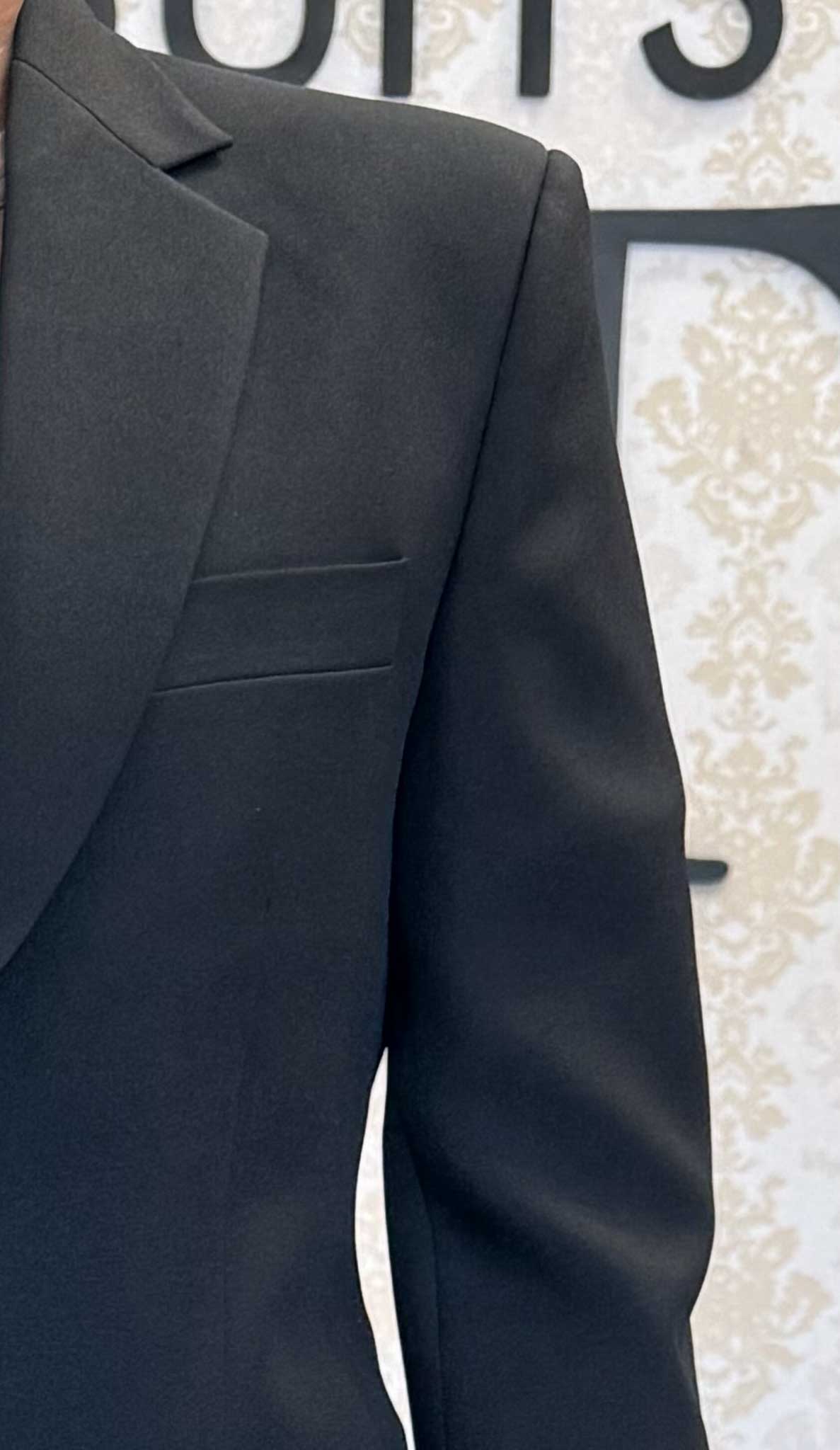
For me as a bespoke tailor, this is the most significant shortcoming of all. A fused jacket lacks character. It carries no real shape through the chest, its drape never feels natural, and whatever structure it holds collapses after only a few wears. The sharp lines of a well made jacket disappear as well, particularly around the sleeves and collar, where the excess bulk introduced by the fusing makes the clean lines of bespoke work impossible to achieve.
Lack of Breathability
A jacket is an outer garment, and its breathability should be matched to the climate in which it is worn. Fusing removes that flexibility entirely. The consequences are felt most keenly in tropical countries such as Sri Lanka and southern India, where breathable cloths like linen and tropical wools are naturally suited to the heat. Fusing largely cancels these advantages and alters the natural drape and flow of the fabric.
Longevity
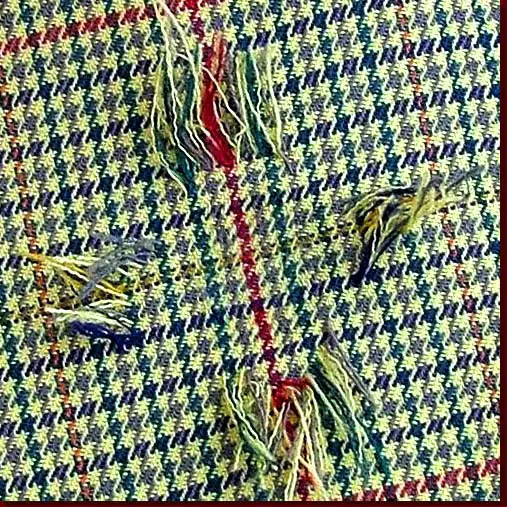
A bespoke jacket, given proper care, can last for generations. A fused jacket can make no such promise. There is no reliable way to predict when failure will occur, only the certainty that sooner or later it will. Compounding the problem, the mending capability of a fused jacket is close to zero. Should a fused suit in an expensive cloth suffer damage on a fused area, repair is simply not possible.
What Makes Things Worse
Some tailors carry fusing to an extreme purely to save time and effort. In certain cases, every panel of the jacket is fused, both to make the fabric easier to handle and to conceal subpar craftsmanship. The practice has eroded standards across the local tailoring industry, leaving many tailors incapable of executing the delicate techniques that true bespoke work demands.
Extreme fusing, combined with stretchy polyester blends, has produced a further complication: the wrinkle free, fold free, perfectly slim silhouette that clients have now come to expect. In reality, that standard is nearly impossible to meet, even for the finest bespoke tailors, because with lightweight cloths it is precisely the natural folds, falling in the right places, that give a garment its character and movement.
The marketing of fused garments as true luxury presents a problem of its own. In markets like Sri Lanka, attention falls almost entirely on the fabric rather than the construction. Combined with limited client awareness, this has produced cases in which genuinely luxurious tropical cloths are fused, yielding a poor result at a price that cannot be justified by any measure.
My Honest Opinion on Fused Suits, and How to Improve Them
If my conversations with tailors and suppliers around the world have taught me one thing, it is that tailoring culture is relative to the place in which you operate and the customers you serve. For a commercial tailoring establishment in Sri Lanka, avoiding fused construction altogether is simply not realistic if the survival and growth of the business are the goals.
In an industry where nearly everything has been commercialised, even the most prestigious fabric manufacturers show little concern for how their finest cloths are ultimately used, provided the orders keep arriving. That is the uncomfortable reality. It would not be entirely fair to condemn it either, since mass production has genuinely moved the fabric industry forward, making cloth more luxurious, more affordable, and more environmentally conscious all at once.
In the Sri Lankan market, the average starting price for a polyester suit sits around Rs. 25,000.00, an accessible figure that has kept the industry functioning through many difficult periods. Fused suits, in my view, should be understood as a fast fashion option rather than a luxury purchase. Fusing wool polyester blends and some entry level wool fabrics is perfectly acceptable, as many of these cloths are engineered with precisely that use in mind, and at current local pricing, such suits can reach Rs. 200,000.00 and beyond.
Fusing a high end luxury fabric, on the other hand, is a waste of both money and effort. Cloths at that level were never intended to be fused, given the research and craftsmanship invested in producing them, and the likelihood of the fusing failing on such fabric is considerably higher.
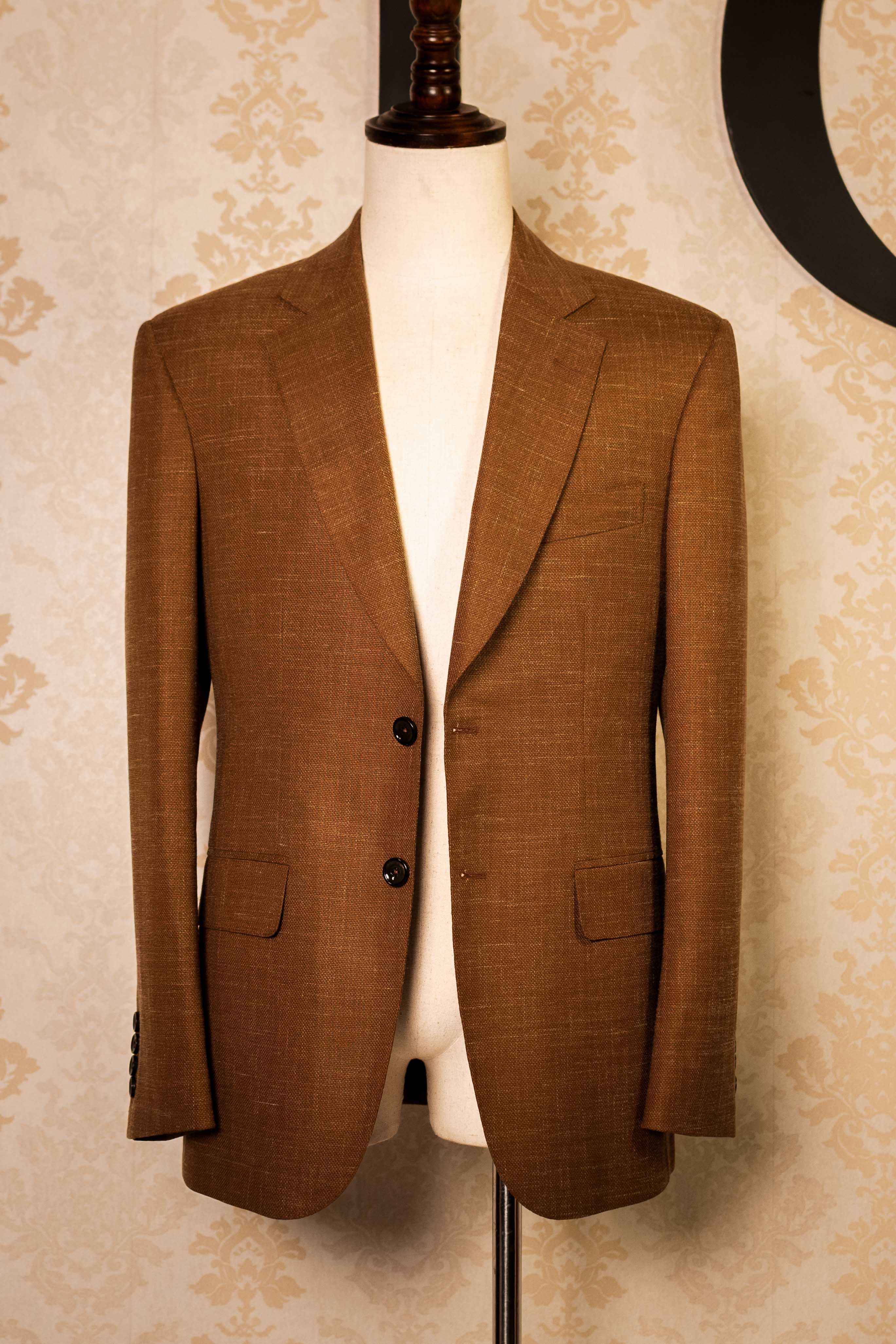
A fused suit can nevertheless be improved substantially. With sufficient hand work, it can be finished to a standard that makes it difficult to distinguish from its bespoke counterpart, at least in appearance. Pick stitching, a custom made chest piece, and hand finishing of the jacket's interior all contribute meaningfully, and many of these refinements already exist in industrial manufacturing with the support of specialised machinery.
A Final Word
The fused suit will likely never earn the respect of the true bespoke tradition, and in many ways, it should not have to. What it has accomplished instead is to make tailoring viable in markets like Sri Lanka's, where full canvas construction was never going to be commercially sustainable for the majority of customers. The honest path forward is not to pretend fusing is something it is not, but to use it where it makes sense, refine it wherever possible, and reserve true bespoke craftsmanship for the fabrics and the clients that genuinely deserve it.
Comments (0)
No approved comments yet. Share your thoughts below.
Leave a Comment
Comments are reviewed before they appear. Use a display name only.